

Five Rules That Separate Winners From Everyone Else
The unsexy fundamentals that actually build careers worth having


I spent three years writing articles in 30 minutes and playing video games the rest of the day.
My journalism job was easy.
Too easy.
I'd crank out content before lunch and then disappear into Call of Duty until 10pm.
The pay was fine.
The life was not.
I got fat.
I got depressed.
I was 26 and coasting toward a future that made my skin crawl.
Then something shifted.
The discomfort of staying the same started hurting more than the idea of changing.
So I went to the gym.
Then I started working at the gym.
Then I taught myself copywriting.
Then I built an agency.
Now I help people scale to six figures per month using AI.
None of that happened because I'm special.
It happened because I followed five rules that work whether you're stuck in a cubicle or running a seven-figure business.
These aren't sexy.
They're not hacks.
They're the difference between people who succeed and people who stay stuck.
Master The Boring Stuff First
You know that quote about fearing the person who practiced one punch 10,000 times instead of practicing 10,000 punches once?
That's the whole game.
95% of success happens in the shadows doing things nobody will ever see or care about.
Repetition.
Fundamentals.
The same basic moves over and over until they're automatic.
This matters because complicated plans fall apart.
The harder something is to follow, the less likely you'll stick with it.
And consistency is the only thing that produces results.
Every athlete, musician, or high performer will tell you the same thing.
They drilled the basics until the basics became instinct.
Then they stacked more basics on top.
Say your strength is communication.
Getting people to listen, persuading them, managing personalities.
Don't complicate it.
Get absurdly good at the fundamentals of conversation.
Notice what makes people lean in.
Track what makes them help you versus ignore you.
Practice that 1,000 times.
Or say you're an engineer.
Don't chase the new framework every week.
Master the core principles of the code you write daily.
Understand it at a level where you can manipulate it without thinking.
The boring part is where everyone else quits.
Which means it's where you win.
Pain Is Data, Not A Stop Sign
Most people wait until the pain of staying the same exceeds the pain of changing.
That's when they finally move.
You see this everywhere.
Your friend complains about their job for two years but never updates their resume.
Another friend hates their relationship but won't have the hard conversation.
Someone else talks about getting in shape while ordering delivery for the fourth night this week.
Why?
Because the effort required to change still feels harder than the misery of staying put.
But if you think the price of effort is too high now, wait until you feel the price of regret later.
That pain is 10x worse.
Sitting at 60 realizing you never tried the things you wanted to try.
Looking back at all the moments you chose comfort over potential.
When I was writing articles in 30 minutes and gaming the rest of the day, I knew something was wrong.
The discomfort was loud.
I was wasting time I'd never get back.
That realization became fuel.
I started going to the gym because sitting still hurt more than moving.
I left journalism because staying felt like dying slowly.
I learned copywriting because I couldn't unsee the gap between where I was and where I needed to be.
Use discomfort as a compass.
When something bothers you for months, that's not noise.
That's your future self trying to get your attention.
And remember, time passes whether you use it or not.
Three years from now will arrive regardless.
You can spend those years building something or you can spend them wishing you had.
Believe You'll Figure It Out
There's a concept called the Pygmalion effect.
People rise or fall to meet expectations.
If you expect to be mediocre, you'll act mediocre and get mediocre results.
If you expect to be the best, you'll train like the best and significantly increase your odds.
This isn't about arrogance.
It's about operating with delusional confidence in your ability to solve problems.
Don't assume you're already the best coder or the best copywriter or the best manager.
Assume you have the capability to become that.
Assume you'll figure out whatever you don't know yet.
When you hit a wall, you don't spiral.
You troubleshoot.
When something doesn't work, you find another angle.
You trust that you're the kind of person who adapts.
Whether you think you can or you think you can't, you're right.
If you believe you can't, you'll give up at the first real obstacle.
If you believe you can, you'll push through until you find the solution.
Rich kids who coast through life with zero effort?
They expect nothing from themselves, so they deliver nothing.
Meanwhile, people who expect themselves to win start acting like winners before the results show up.
Expect yourself to succeed.
Then behave accordingly.
Spend Time On What Matters, Delegate The Rest
For every hour you work, you should get two units of value out.
If you're not hitting that ratio, you're focused on the wrong things.
Here's how to figure out what your time is worth.
Take your yearly salary and divide it by your annual work hours.
Let's say you make $100,000 and work 2,000 hours.
That's $50 per hour.
Now ask yourself, if a task takes five hours, is it worth $250?
Could you pay someone else less than $250 to do it?
Could you use AI to handle it for free?
If yes, stop doing it yourself.
This applies to everything.
Logo design.
Website tweaks.
Data entry.
Administrative nonsense.
Anything that keeps you busy without moving the needle.
Your job is to focus on the tasks only you can do.
The high-leverage activities that directly create value.
Everything else should be automated, delegated, or deleted.
The trap is feeling productive because you're busy.
Busy is easy.
Busy feels like progress.
But if you spend five hours formatting a presentation when you could have paid someone $50 to do it, you just burned $200 of your time.
Get ruthless about protecting your hours.
If it doesn't require your specific skill set, get it off your plate.
Get Paid For Accountability, Not Activity
The more people rely on you, the more you get paid.
The more responsibility you handle, the higher your value.
This is true in jobs and in business.
If you're doing low-skill work where nobody checks if you show up, you're not getting paid well.
If you're doing work where other people's success depends on you completing your part, you're getting paid more.
In business, if you're just making ad creatives for a client, that's one level of value.
If you're running their entire ad account, building their funnels, writing their email sequences, and managing their growth strategy, you're getting paid significantly more.
Because now their revenue depends on you.
The other piece is doing work others can't easily replace you for.
If anyone can do what you do, you're capped.
If the work requires your specific combination of skills, you're irreplaceable.
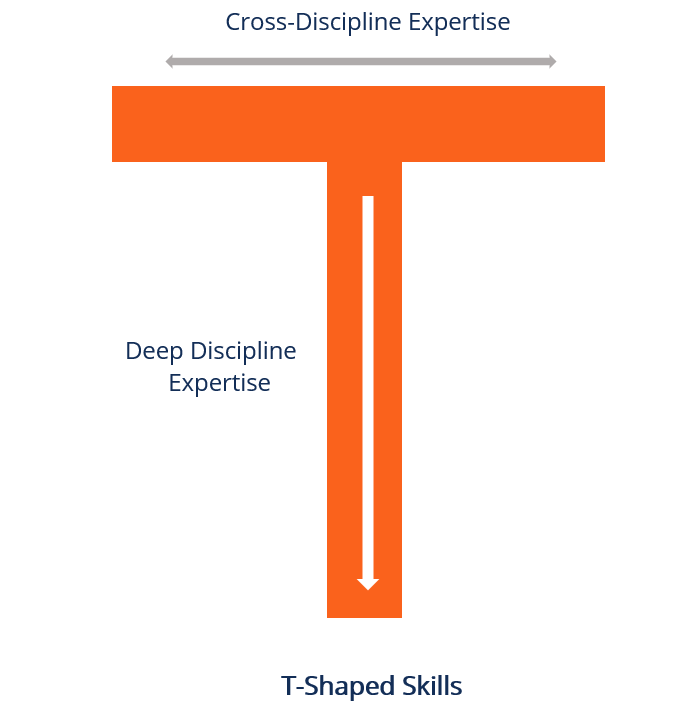
Think of yourself as a T-shaped skill set.
The vertical line is your core competency.
The horizontal line is your complementary knowledge that makes the core skill more valuable.
Say you're in data entry.
That's the vertical.
Boring, low-paid, replaceable.
But if you also understand financial markets and trading strategies, and you're working at a hedge fund, suddenly you're not just entering data.
You're analyzing it.
You're spotting patterns.
You're setting up systems that improve decision-making.
Now you're valuable.
Stack skills that are specific to you.
Combine expertise that makes the core skill more valuable.
Then take on more responsibility.
Handle more of the outcome.
The more return you generate for a company or client, the more they'll invest in you.
You're a stock. If they pay you $100,000 and you make them $1 million, they're thrilled.
If you make them $5 million, they'll pay you $500,000.
Your value is determined by how much you're trusted to deliver and how hard you are to replace.
Where This Leaves You
None of these rules are complicated.
They're not secrets.
But most people won't follow them because they're not flashy.
They require patience.
Discipline.
Honest self-assessment.
A willingness to do boring work while everyone else chases shortcuts.
But if you actually apply them, you separate yourself from 95% of people.
Master the basics.
Use pain as fuel.
Believe in your ability to adapt.
Protect your time.
Increase your accountability.
Do that consistently for 12 months and your life looks different.
Do it for 36 months and you're unrecognizable.