

Four Hours in DaVinci Resolve and Nobody's Waiting
Why I'm documenting everything even though it makes no sense

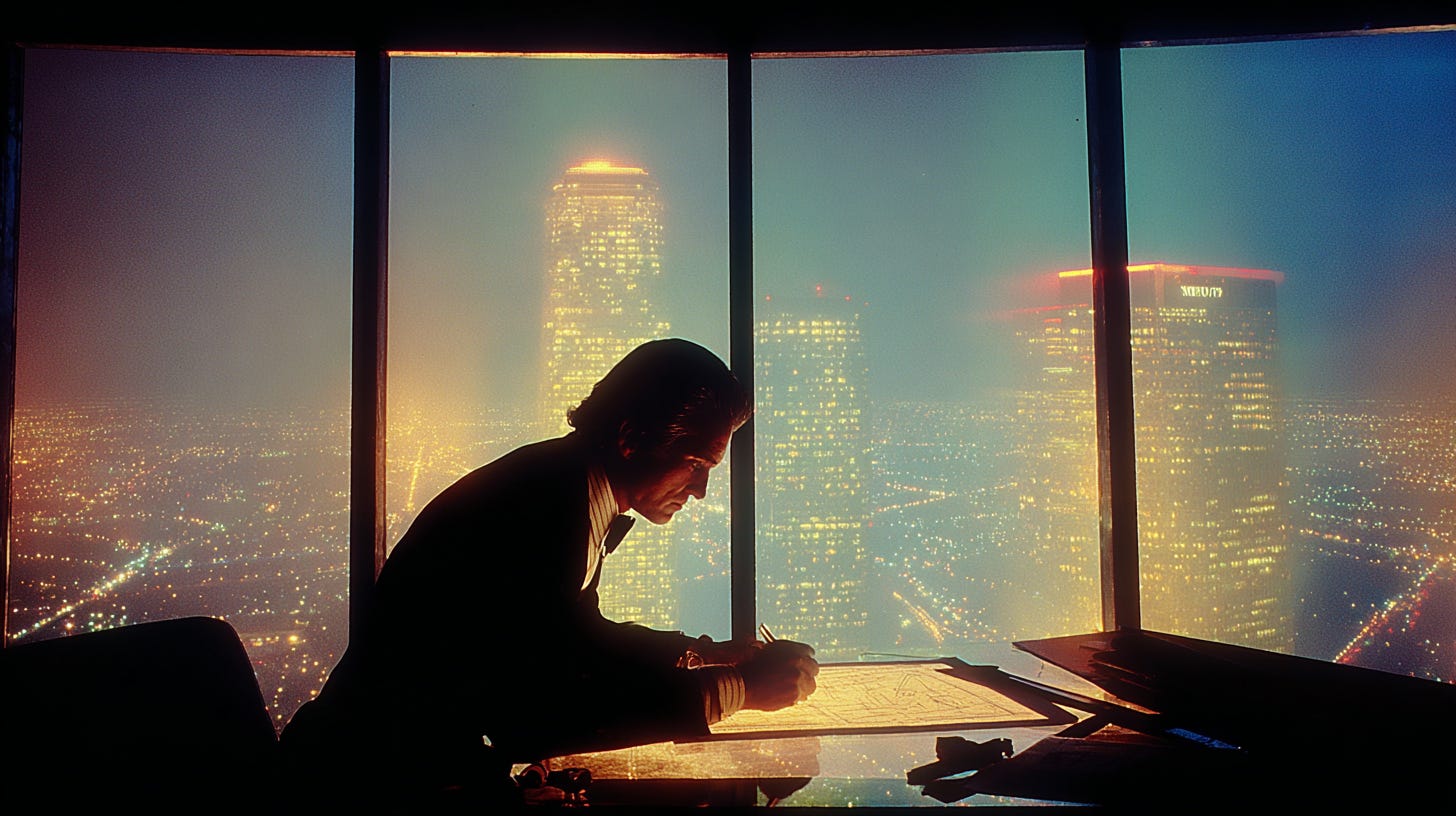
I spent four hours yesterday color grading footage that nobody asked for.
Vintage text effects.
Chromatic aberration.
Film grain.
All the little touches that make video feel cinematic instead of just captured.
I was deep in DaVinci Resolve tweaking curves and adjusting highlights, and about two hours in I had this moment where I thought.
Who the fuck is this for?
Nobody is sitting around refreshing my YouTube channel waiting for Lucas to post about his Tuesday.
But that’s exactly why I’m doing it.
The Math That Changes Everything
When you work in private, your upside is capped by your network.
Every opportunity that finds you has to travel through someone who already knows what you’re capable of.
Your reputation exists in this tiny bubble of past clients and colleagues who might remember that thing you did that one time.
The ceiling is low because the room is small.
When you build in public, the ceiling disappears entirely.
Anyone anywhere can stumble onto what you’re building and decide they want in.
Your reputation compounds because every piece of work you ship is simultaneously proof of competence and a permanent searchable artifact that works for you while you sleep.
Buffer started sharing their revenue, salaries, and user numbers publicly back in 2013.
They called it “Default to Transparency” and it became their entire culture.
People didn’t just buy their product, they bought into their story.
They wanted to be part of what Buffer was building because they could see exactly what that was.
Pieter Levels has been sharing his revenue and traffic metrics since 2018.
He grew to over 130,000 Twitter followers not by posting motivational quotes but by showing the unglamorous reality of building products.
The server issues.
The failed launches.
The wins that came after dozens of losses.
Scott DeLong posted one tweet about building a niche site and documenting the process.
It went viral.
He gained 13,000 newsletter subscribers overnight.
People didn’t subscribe because he was already successful - they subscribed because they wanted to watch him try.
The pattern is consistent.
Share the process, not just the outcomes.
Let people watch you figure it out.
The audience compounds faster than you can imagine.
The Part That Makes You Want to Hide
But here’s what nobody tells you about building in public.
It’s fucking terrifying.
Because it means showing work that isn’t finished yet.
It means admitting you don’t know the answer.
It means publishing things that are rough around the edges because the alternative - waiting until everything is perfect - is actually worse.
The video I’m editing right now?
It’s rough.
The audio has some background noise I couldn’t fully remove.
I say ‘um’ too much in the middle section.
There’s a part where I completely lose my train of thought and you can see me pause to remember what I was talking about.
I’m going to edit the hell out of it and publish it anyway.
Because the alternative is waiting until I sound like a polished media professional.
And that day isn’t coming.
More importantly, that polish isn’t what people actually want.
I’ve been running Applied Leverage and Client Ascension long enough now to notice a clear pattern in who succeeds.
The students who move fastest are almost always the ones willing to be embarrassed in public.
They post their first landing page before the copy is refined
They share their offer while they’re still figuring out the positioning
They put themselves out there while they’re still learning
The students who struggle are the ones who want to perfect everything behind closed doors and only emerge when they’re ready.
Except they’re never ready.
Because readiness is a feeling, and feelings are unreliable narrators.
What The Agentic Vlog Actually Is
So I’m calling this experiment the Agentic Vlog.
It’s radical transparency about literally everything.
The coding sessions where nothing works.
The debugging nightmares where I stare at console logs for two hours.
The moments where I have absolutely no idea what I’m doing next.
All of it.
Yesterday I spent two hours debugging a React mounting error in the Clawdbot dashboard.
Just me, a terminal full of red text, and growing frustration.
I tried random things.
I googled variations of the same error message.
Abused Claude Code to fix it for me.
I recorded all of it.
That footage is going in the vlog.
You might be wondering why the hell I would show that.
Who wants to watch someone be confused and ineffective?
But showing the struggle is actually more valuable than showing the success.
When you only see polished outcomes, you can’t extract any lessons.
You don’t know what decisions were made or why.
You don’t see the dead ends and wrong turns.
You just see the highlight reel and assume the person operates on some higher plane of competence that you’ll never reach.
When you see the process - the messy, embarrassing, uncertain process - you learn that everyone is making it up as they go.
You learn that competence isn’t the absence of confusion.
It’s the willingness to push through confusion anyway.
The Q&A Call That Changed How I Think About Expertise
I hosted a Q&A call for the AIAA community yesterday.
Great discussion about hosting costs and workflow architecture.
Someone asked about Railway versus running your own N8N instance.
I started explaining the tradeoffs and about halfway through I realized I didn’t actually know the exact cost comparison off the top of my head.
Old Lucas would have panicked.
Admitting you don’t know something in front of paying customers feels like weakness.
Like you’re exposing yourself as a fraud who doesn’t deserve to be leading this conversation.
Instead, I said “I don’t know the exact numbers, let me pull up my Railway dashboard” and I showed them my actual costs live on the call.
You know what happened?
People appreciated it.
They saw the actual real world usage and costs of a power user like me and it gave them a better understanding of what they’re likely to pay.
It definitely didn’t give the impression I was stupid or didn’t know what I was doing - it was the exact opposite effect.
It showed I was actually using the tools and doing the things I talked about daily, and no one would expect me to know those figures off the top of my head.
But they key lesson here is that authentic incompetence is more relatable than performed competence.
And relatability builds trust faster than expertise ever could.
The Archive That Compounds Forever
This is why I’m obsessed with capturing everything.
The ScreenPipe logs feeding into my activity journal.
The daily vlog recordings.
The behind-the-scenes of every project.
I’m building an archive of process that will compound in value forever.
Think about it this way.
What if you could go back and watch how Elon Musk actually spent his days in 2008 when Tesla was circling the drain?
Not the TED talks and keynote interviews - the actual daily reality.
The meetings where people argued.
The emails where he wasn’t sure what to do.
The moments of doubt between the moments of conviction.
That footage would be priceless.
I’m not Elon obviously.
But I’m building things that might matter someday.
And even if they don’t matter to anyone else, the documentation itself has value.
It’s content that nobody else can create because nobody else is living my specific experience.
Every person’s journey is unique.
Your particular combination of struggles and insights and dumb mistakes - that’s unreplicatable.
It’s the one thing you can create that has zero competition.
The Counterintuitive Part
The really strange thing is that building in public actually makes you better at your work.
When you know you’re going to share what you’re doing, you think more carefully about decisions.
You document as you go instead of trying to remember later.
You reflect on what’s working and what isn’t because you know you’ll need to explain it.
I’ve caught myself making better architecture decisions because I know I’m going to have to explain them in the vlog.
The accountability of future explanation improves present execution.
It’s like having a ghost of your future audience looking over your shoulder asking “why did you do it that way?” and forcing you to have a good answer.
You can’t bullshit your way through an explanation to people who are watching you build.
Either the decision makes sense or it doesn’t.
Either you learned something or you didn’t.
The transparency forces clarity.
Start Now, Not Later
So if you’re sitting on the sidelines waiting until you have something impressive to show…
STOP.
Start now.
The embarrassing early stuff is actually the most valuable content you’ll ever create because you can only make it once.
Your beginner mistakes are relatable to other beginners.
Your learning journey is interesting to people who are slightly behind you on the same path.
Your work-in-progress is more authentic than anyone’s polished portfolio.
Document the mess.
Ship the rough draft.
Let people watch you figure it out.
Nathan Barry documented building a revenue tool over six months via blog posts.
Not after he succeeded - during the actual build.
People followed along because they wanted to see if he’d pull it off.
When he did, they were already invested in the story.
They’d watched him struggle.
His success felt like their success.
That’s the power of bringing people along for the ride.
The internet rewards the brave and punishes the perfect.
Every day you spend waiting for your work to be ready is a day someone else is building their audience by sharing their messy process.
Stop thinking.
Start doing.