

Your Brain On Slop
How a $50 e-reader saved my attention span from 90 hours of TikTok brain rot

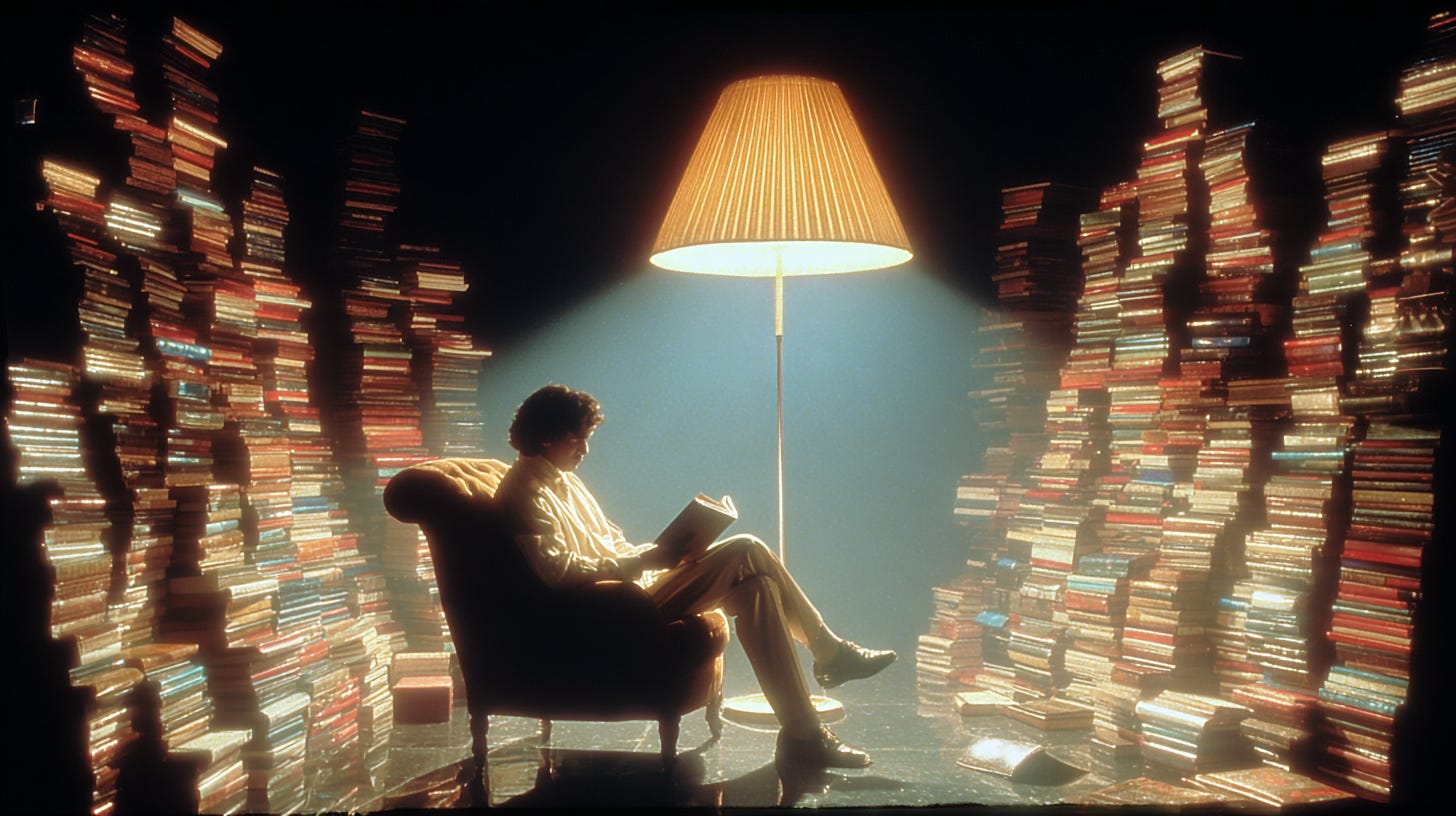
Three days ago I sat down to read for 20 minutes and couldn't make it past three pages.
Not because the book was boring.
Blood Meridian by Cormac McCarthy is brutal and gripping and exactly the kind of thing I've always loved.
But my brain kept reaching for something, some invisible pull toward my phone sitting six inches away.
Within minutes I'd swapped the book for Twitter.
Then I somehow ended up watching a 47-minute compilation of people falling off motorcycles.
That was the moment I realized I had a real problem.
Your Attention Span Is Being Rewired
I used to read constantly.
As a kid, I'd burn through everything my mum had in her library.
Classics, modern fiction, psychology books, all of it.
Chuck Palahniuk and Bret Easton Ellis taught me more about human nature than any business book ever could.
I learned to think through narrative.
Through characters making decisions and facing consequences.
But somewhere in the last few years, that all disappeared.
My Kindle library filled up with unread books while my screen time reports showed 8, 9, sometimes 10 hours a day on my phone.
Most of that was TikTok and Twitter.
Just scrolling.
Consuming what researchers are now calling "brain rot."
The science on this is pretty damning.
Short-form video platforms condition your brain for rapid dopamine hits,
Every swipe delivers something new, triggering your reward system over and over.
Your frontal cortex, the part responsible for sustained attention and executive function, basically gets exhausted from constant context-switching.
Reading requires your brain to engage complex processing pathways, build mental models, make inferences.
Scrolling just needs you to register novelty and keep swiping.
One study found that heavy TikTok users show reduced theta brainwave activity in their frontal cortex.
Literally measurable changes in how their brains process information.
Another linked short-video addiction to diminished impulse control and memory formation.
Your brain adapts to what you feed it.
And I'd been feeding mine junk food for years.
The weird part is knowing all this didn't help.
I'd delete TikTok, reinstall it two days later.
Turn off notifications, then manually check the app 40 times a day anyway.
The pull was too strong.
I needed a different approach.
The Intervention
I already owned a large e-ink tablet for reading.
One of those A4-sized tablets with a warm backlight from a company called Daylight.
Beautiful device, genuinely feels like paper, great for reading and taking notes.
But you can't exactly carry that thing around everywhere.
It lives on my desk or beside my bed.
This means when I'm sitting on the couch or waiting somewhere or just have five minutes to kill, I do what everyone else does.
I default to my phone.
So I started looking for something smaller.
Something I could actually have with me all the time, attached to the thing causing the problem.
That's when I found the XTEINK X4.
(this is not a paid post, there’s no affiliate links here)
This thing is tiny.
Look at it.
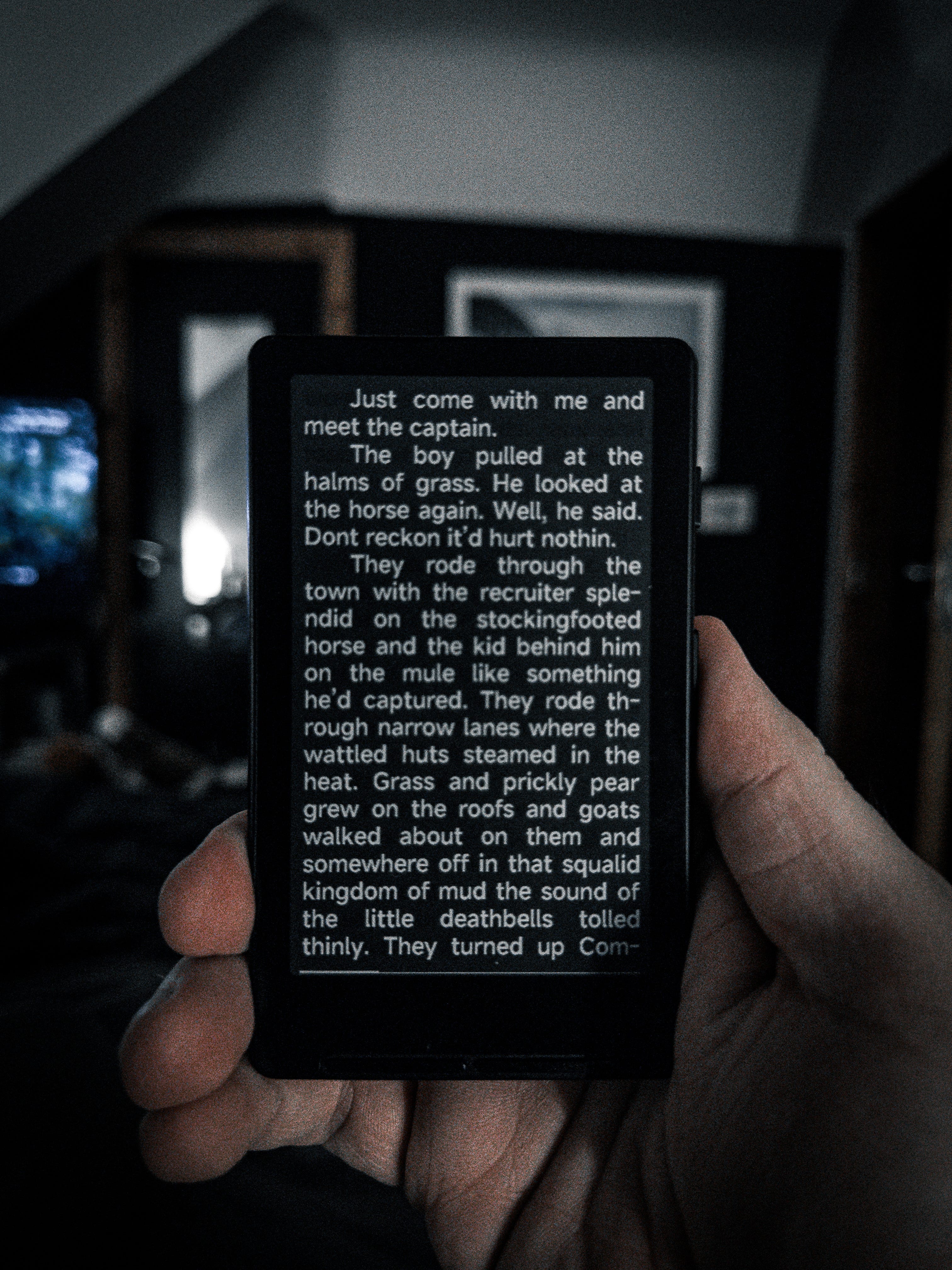
It’s about the size of an old iPod Touch, maybe 4.3 inches.
It's an e-reader, pure and simple.
No web browser, no apps, just books.
The screen is proper e-ink, 220 PPI, looks like actual printed text.
32GB of storage means it can hold basically every book you'll ever want to read.
But the feature that I cared about.
The thing that makes this work and saves me from brainrot.
MagSafe.
This little device just clicks onto the back of your phone and stays there.
The Brain Hacking System
I've been keeping this e-reader attached to my phone for the past three weeks.
Every single time I reach for my phone to scroll.
And I mean EVERY time.
I flip it over, pop off the reader, and read a few pages instead.
The friction is almost zero.
I don't have to:
Go find a book
Make a decision about what to read
Download it from the cloud
Overcome any resistance.
The book is literally in my hand the second I want to procrastinate.
And something strange started happening.
Reading stopped feeling like work.
The first few days were hard.
My brain kept wanting those quick hits,
Those rapid scene changes.
That constant novelty.
But after about a week, I noticed I could actually focus on a paragraph without my attention wandering whatsoever.
Then a page.
Then ten pages without even thinking about checking notifications.
My screen time dropped from around 9 hours daily to under 3.
Not because I forced myself.
Not because I used app blockers or timers.
But because I replaced the behavior with something that scratched a similar itch.
The itch to escape boredom.
To fill empty moments.
To do something with my hands.

Except now instead of training my brain to need constant stimulation, I was training it to sustain attention.
To follow a narrative thread.
To sit with complexity and ambiguity and let meaning emerge slowly.
This is how books used to work, before our brains got hijacked.
Why This Actually Works
The XTEINK X4 costs $50 on AliExpress.
It's not some premium device.
The interface is basic.
Navigation is button-based.
It only supports TXT and EPUB files.
There's no backlight.
No fancy features.
Nothing to distract you from the actual purpose.
And that's exactly why it works.
Every behavior change I've ever made stick has involved the same principle.
Make the thing you want to do easier than the thing you're trying to avoid.
Not through willpower.
But through environmental design.
I could have tried blocking apps on my phone.
I've done that before.
But then I just find ways around the blocks.
Or I get frustrated when I actually need the app for something legitimate.
The phone is still right there.
Still calling to me.
With this setup, I have a secondary device that literally cannot show me TikTok or Twitter.
It can only show me the book I'm reading.
So when my brain reaches for distraction, it gets reading instead of scrolling.
The MagSafe attachment is what makes this work.
If I had to pull the reader out of my pocket or bag, if there was any friction at all, I probably wouldn't use it.
But it's already attached to the thing I'm holding.
It only took a few days and something shifted.
I started reaching for my phone less.
Not because I developed superhuman discipline.
But because the dopamine hits from scrolling felt hollow compared to actually following a story.
My brain remembered why reading used to be satisfying.
Because narrative gives you something short-form content never can.
Context.
Meaning.
A sense of going somewhere.
Focus Is A Muscle You've Stopped Training
If you're someone who needs deep focus for your work.
And honestly, who doesn't.
You can't afford to let your attention span deteriorate.
Every hour spent training your brain to expect constant novelty makes it harder to do anything that requires sustained concentration.
You know this already.
You've felt it.
That moment when you sit down to do deep work and your brain is like a puppy on cocaine, bouncing between tasks, unable to settle.
Reading is the simplest way to rebuild that capacity.
Not productivity books or business books or self-help books.
Those are fine, but they're not the point.
The point is narrative.
Following a story.
Holding characters and plot threads in your head.
Making connections across chapters.
Staying with something for hours.
That's the workout.
That's what strengthens the muscle.
What To Do
If you're reading this and thinking "yeah, my attention span is fucked," here's what actually works:
Get an e-reader you can carry everywhere.
Preferably one that attaches to your phone or fits in your pocket.
The XTEINK X4 is $50 and does exactly this.
Load it with books you actually want to read, not books you think you should read.
Turn off all notifications from social apps.
Not just TikTok, all of them.
If you need to check something, you can check it manually.
But stop letting your phone interrupt your attention every three minutes.
Replace the behavior instead of trying to eliminate it.
When you reach for your phone to scroll, read instead.
Same urge, different action.
Your brain will adapt.
Start with anything that holds your attention.
For me, fiction works better than non-fiction because narrative naturally pulls you forward.
Blood Meridian is violent and strange and nothing like a TikTok video, which is exactly why it's working.
Find your version of that.
Give it two weeks.
The first few days will feel hard because your brain is withdrawing from constant stimulation.
Push through.
By day seven or eight, reading will start feeling natural again.
By day fourteen, scrolling will start feeling empty.
Your attention span is not permanently damaged.
It's just been trained into a shape that doesn't serve you.
You can train it back.
I'm three weeks in and I've finished one book and I'm halfway through another.
(Project Hail Mary, good book, movie coming out soon with Ryan Gosling)
My screen time is down by two-thirds.
My ability to focus on work has noticeably improved.
Not because I'm more disciplined, but because I stopped feeding my brain junk.
You can do the same thing.
You probably should.
Your brain on slop feels like shit.
Your brain on books feels like waking up.